Settling Into a New City Without Feeling Lost

Settling into a new city is a strange mix of thrill and fatigue. The streets are full of possibility, yet you cannot find a decent pharmacy, and every small errand takes three times longer than it did at home. That feeling is normal, and it does fade. What speeds it along is not a grand plan but a handful of small, repeatable habits.
Settling into a new city starts with the first two weeks
Many people arrive with a long mental list: find the perfect flat, make close friends, learn the whole transport system, discover the best restaurants. Trying to do everything at once is a quick route to exhaustion. Instead, think of the first fortnight as a practical setup period. Your only job is to make daily life work.
Sort out the basics first: a reliable internet connection, a way to pay for transport, a local phone number if you need one, and a note of where the nearest doctor, grocery shop and pharmacy are. Once these are settled, the city stops feeling like a puzzle and starts feeling like a place you can function in.
Learn one neighbourhood deeply
A large city is overwhelming if you try to understand all of it. Pick the few streets around where you live and get to know them well. Walk them at different times of day. Notice which bakery has a queue at eight in the morning, which park fills up on weekends, and which corner stays quiet in the evening.
This local focus pays off in small ways. Shopkeepers begin to recognise you. You learn which shortcut saves five minutes. Familiarity is built from repetition, so choose a regular café, market or library and return to it often. Being a face people half-know is a quiet but real form of belonging.
Walk before you ride
Public transport is useful, but it hides the city between stations. In your first month, spend a few unhurried afternoons simply walking. You will build a mental map far faster than you would by following a blue dot on a screen, and you will stumble on places no list would have mentioned.
Build a rhythm that feels like home
Routine is the strongest antidote to feeling unsettled. When your surroundings are new, small fixed points give you stability. These do not need to be dramatic. Here are a few that tend to work well:
- Make the same simple breakfast each morning so the day starts on familiar ground.
- Take a short walk at the same time daily, even if only around the block.
- Cook one dish from your home country each week and eat it at a proper table.
- Set a regular time to call family or friends back home.
- Keep one evening free each week with no plans, just rest.
Over time these anchors blend with new habits you pick up locally, and the line between old life and new life softens.
Meeting people without forcing it
Friendship rarely arrives through a single big event. It usually grows from seeing the same people repeatedly in a shared setting. That is why clubs, classes, volunteering groups, sports sessions, language exchanges and workplaces tend to work better than one-off social evenings.
Choose one activity you would enjoy even if you made no friends there. A pottery class, a running group, a community garden or a book circle all qualify. Go regularly for a couple of months. People who attend week after week naturally begin to chat, and invitations follow. If you are working remotely, a shared workspace or a regular café session can serve a similar purpose.
Be the one who suggests
Everyone is a little shy, and many people are waiting for someone else to propose coffee. Being the person who says, “Would you like to grab something after this?” feels risky for a moment and then usually goes well. A simple, low-pressure plan is easier to accept than a big one.
Be kind to yourself about the dip
Almost everyone who moves experiences a low patch somewhere between the second week and the third month. The novelty wears off, but the routines have not yet formed. You may miss food, weather, language or simply being understood without effort. This does not mean you made the wrong choice.
During this stretch, protect the basics: sleep, regular meals, daylight and movement. Keep a short list of things that comfort you and do one each day. Talk to someone about how you feel rather than presenting only the cheerful version. If the low mood lingers or becomes heavy, speaking with a qualified professional is a sensible step.
Make your home base feel personal
Your living space is the one corner of the city you fully control. Spend a little time making it yours. Unpack properly instead of living out of suitcases. Hang a few photographs, add a plant, choose a lamp with warm light, and keep one item that smells or looks like home. A space that feels like yours gives you somewhere to recover from the effort of adapting outside.
Give it time, and keep a few notes
One helpful habit is jotting down small wins: the first time you navigated without a map, the first conversation with a neighbour, the first meal you cooked from local ingredients. When you feel stuck, reading these reminders shows how far you have already come. Belonging rarely arrives with a clear moment; it simply builds until one day you say “going home” and mean this city.
Frequently asked questions
How long does it take to feel at home in a new city?
It varies widely. Many people feel reasonably comfortable after a few months and truly settled after a year, but personality, language and circumstances all play a part.
What if I do not speak the local language well?
Learn a few everyday phrases first and practise them in shops and cafés. Language exchange groups and community classes also help, and most people appreciate the effort.
Is it normal to feel lonely at first?
Yes, it is very common. Regular activities, small daily routines and staying in touch with people back home usually ease the feeling over time.
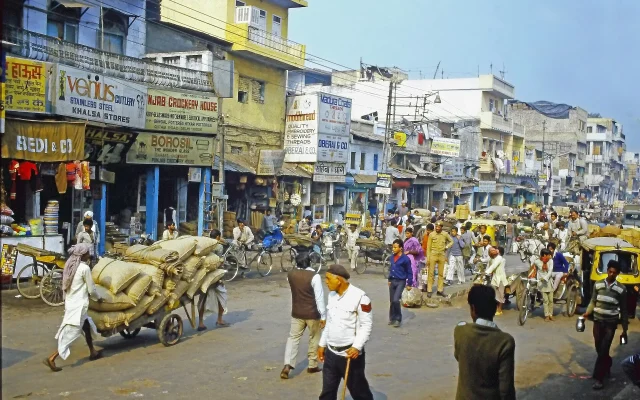
Photo: Street in Old Delhi, India by Jan Kranendonk (https://www.jankranendonk.nl), licensed under CC BY-SA 4.0, via Wikimedia Commons.