Delhi
From being the administrative capital with a population of 7
lakhs in 1947, to 13 .8 lakhs in 2001, Delhi is rapidly moving
towards being a world city. At the heart of the National Capital
Region lies the National Capital Territory of Delhi (NCTD). It
covers an area of 1483 sq. km, comprising just 4.41% of NCR and
37.22% of its population.
The Delhi Metropolitan Area has been redefined comprising the
NCTD, Ghaziabad-Loni Complex, Noida and Greater Noida-controlled
area of Uttar Pradesh, Faridabad-Ballabgarh Complex, Gurgaon,
Bahadurgarh Kundli and the extensions of the Delhi Ridge in Haryana.
Delhi is a mix of planned and unplanned development. Lutyens’
Delhi and Chankyapuri with its majestic Embassy, school and office
buildings stand in contrast to the commercial areas of Janpath
which have grown unchecked. On the other hand, heritage structures
of the Mughal era lend a quaint charm that is quintessentially
"Delhi".
The Delhi resident enjoys privileges that no other city can provide
– be they educational, cultural, medical, or shopping, food and
entertainment, all of which are the best that the country can
offer. Being ‘primus inter pares’ amongst cities in India, Delhites
are privy to all the firsts that are launched in India.
Delhi boasts of a per capita income that is two and a half times
higher than the national average. The affluence is reflected in
the high spending power and extravagant lifestyle Delhi is famous
for. The city with the largest number of automobiles on the road
has also won the US Department of Energy’s first ‘Clean Cities
International Partner of the Year’ award for ”bold efforts to
curb air pollution and support alternative fuel initiatives”
achieved by enforcing CNG-run public transport.
Infrastructure and Facilities
The process of planned development for Delhi was envisaged as
a public sector led process with very little private participation.
The Master Plan 2021 deviates from its predecessors to cater to
a population of 23 million by 2021. Vision 2021, integral to the
Master Plan for Delhi aims to create a world-class city through
a purposeful transformation of the existing civic infrastructure.
The deviation will see a critical reform in the prevailing land
policy and in following the public – private partnership model
for redevelopment of existing colonies, and opening up
of an additional 25 to 30,000 hectares of land that will be required
to provide for the 23 million citizens of the city by 2021.
The MRTS Network operates three lines with a total length of
65 km and 59 stations and will eventually cover 244.9 km. By 2017,
30% of the NCTD will be within a 15 minute walking distance from
the proposed Metro stations.
The Greater NCTD has opened up to the mixed use of available
land to meet the growing commercial needs – 2183 streets have
already been notified for local commercial and mixed use activities,
and shops catering to daily needs have been allowed on the ground
floor of residential buildings.
Meanwhile, as part of its makeover plans for Delhi, the Planning
Commission has sanctioned Rs. 2,270 crore in 2007 for its transportation
network. This is 40% of the city’s budget of Rs. 5200 crore. By
the year 2010, more hotels, a multi-modal transport system and
a world-class airport, nine museums, open air theatres, light
and sound shows, vastly improved civic services, convention centres
at Pragati Maidan, Yamuna diversity Park of 457 acres, a metro
link to the Nehru Stadium and 38 high capacity bus corridors will
be ready
On the National Highway connecting the city to Gurgaon, flyovers
and underpasses are being planned at Station Road and Palam Road-Parade
Road junction, making the international airport more accessible.
An underpass at Rao Tula Ram is also under consideration to reduce
congestion between Moti Bagh and Signal Vihar.
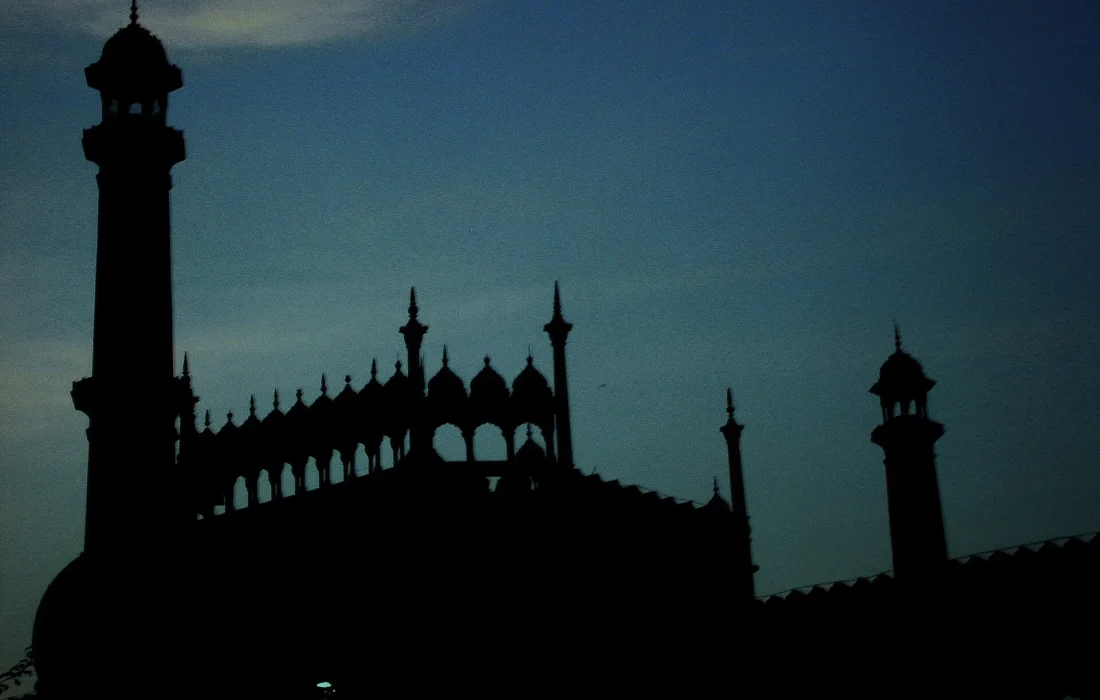
Photo: Delhi skyline. 01 by Fredericknoronha, licensed under CC BY-SA 4.0, via Wikimedia Commons.